Author Archive
Steve shuffles off his mortal coil
Written By: - Date published: 4:14 pm, March 10th, 2009 - 56 comments

Protecting workers’ rights, protecting ACC, safeguarding jobs, public services, and SOEs, opposing privatisation. These are all important fights. But it’s a crime we’re having to fight them at all. While we are concerned with such things, the enviro/economic challenges to the sustainability of our society barely get a look in. Peak oil, climate change, depletion […]
The praiseworthy and the pitiful
Written By: - Date published: 1:59 pm, March 6th, 2009 - 16 comments

Adrian Orr and Brian Fallow‘s pieces on the New Zealand Superannuation Fund and the economics of long-term investment in a declining market. A+ The same arguments you’ve seen here and neat rebuttals of this ‘we’re borrowing to invest’ nonsense. Orr, the head of the Fund whose reputation is unquestioned, sums it up nicely by stating […]
Softening up
Written By: - Date published: 2:22 pm, March 5th, 2009 - 26 comments

A few points on the ACC issue and one on Kiwirail. Nick Smith says that, with assets of $10 and liabilities of $21 billion, if ACC were an insurance company it would have gone under years ago. But it’s not an insurance company. Because its costs can be met by the sovereign revenue raising power […]
Fiddling while the world burns
Written By: - Date published: 7:58 am, March 5th, 2009 - 79 comments
The latest New Scientist brings together the work of thousands of scientists to describe what would happen to the world if the global temperature rises by 4 degrees, which is the mid-range for the projected increases due to climate change. Many of you will simply continue to reject the notion of climate change and its […]
Worrying about the big stuff
Written By: - Date published: 6:00 pm, March 4th, 2009 - 12 comments
In the age of the media politician, where catch-phrases are given more attention than laws and good politics is awarded more points by the commentariat than good government, it’s not fashionable to worry too much about the health of our constitutional arragnements and our institutions. But I do. Here’s some of the things that have […]
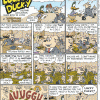
The Atlases shrug, ‘I dunno’
Written By: - Date published: 9:28 am, March 4th, 2009 - 14 comments
In the Dom yesterday, Hollow man star Richard Long was full of praise for the Key’s PR team, who managed the Jobs Summit. He was right to praise them, the media lapped it up – ‘cycleway!’, ‘packed lunches, and no cream for the apple pie, how thrifty!’ (since when did you get get cream, or […]
Welcome to the real ACT party
Written By: - Date published: 12:34 pm, March 3rd, 2009 - 7 comments
This their slogan: “ACT – the liberal party” This is the reality: “We’ve got too hung up on people’s rights.”
National’s real rolling maul
Written By: - Date published: 6:16 am, March 3rd, 2009 - 40 comments

You know what we haven’t heard Key talk about in a long time? Closing the wage gap with Australia. Now he’s in power, is he going to do anything about creating a high wage economy? Doesn’t look like it. The truth is Key’s National/ACT Government is undertaking a rolling maul of anti-worker policies that take away our work […]
DL Christchurch, change of speaker, plus other DL events
Written By: - Date published: 3:33 pm, March 2nd, 2009 - 13 comments

Labour leader Phil Goff will now be speaking at DL Christchurch this Thursday. Therese Arsenau has moved to a later date. When: 7pm, March 5 Where: Goodbye Blue Monday Who: Phil Goff and a who’s who of Christchurch lefties and don’t forget DL Dunedin’s first event is tomorrow, March 3. When: 7pm, March 3 Where: The […]
Let the Nats know that women matter too
Written By: - Date published: 11:52 am, March 2nd, 2009 - 34 comments

National/ACT’s record for women so far has been dismal . Their work rights have been slashed by the Fire at Will law (women are disportionality employed by small businesses), they were all but excluded from the Job Summit (despite women being the most heavily affected by job losses and reduced hours), they got only a […]
Pragmatically, the tax changes need to go
Written By: - Date published: 6:29 am, March 2nd, 2009 - 17 comments
The debate around whether we should go through with National’s tax adjustments (they’re only cuts for the rich, they’re increases for middle and low incomes) has re-ignited as the commentariat suddenly cottons on that they are unfair and unaffordable, thanks largely to Fran O’Sullivan. As always, we at The Standard like to try to inject […]
You’ve got to know to understand (and be able to talk about it)
Written By: - Date published: 1:15 pm, March 1st, 2009 - 58 comments
In the greatest economic crisis in a lifetime, we remain the only country in the world whose government has done nothing to try to stimulate the economy. In fact, the net effect of National’s policies is de-stimulatory, taking money out of the economy when it most needs an injection of spending. And I blame the […]
Bottoms up, Bill
Written By: - Date published: 12:03 pm, March 1st, 2009 - 15 comments
It’s said that, once upon a time, Bill Ralston had a social conscience. He still claims to be a leftie at heart. If ever proof were needed that he’s become just another rich, detached elitist it’s this: “Before we all collectively slit our wrists it’s worth pointing out that unless you are a director of […]
Remember the big picture, Fran
Written By: - Date published: 8:30 pm, February 28th, 2009 - 66 comments
Fran, you’re pretty smart, you can do maths, and you understand the economy. You’re ideology is fundamentally flawed but at least you’ve got the analytical tools. So, how can you go and write something like this “It can cut a number of Labour’s own expensive prior election bribes, like making student loans interest-free.” Fran, think […]
Launch of DL – Dunedin
Written By: - Date published: 4:18 pm, February 27th, 2009 - 8 comments

I’ve just got an email on the launch of the Drinking Liberally chapter in Dunedin: Come raise your spirits as you raise a pint as New Zealand’s network of progressive drinking clubs arrives in Dunedin. Drinking Liberally is an informal, non-programmatic gathering of like-minded left-leaners, an opportunity to share you ideas while you share a […]
The praiseworthy and the pitiful
Written By: - Date published: 3:30 pm, February 27th, 2009 - 4 comments
Trevor Mallard for getting himself into one of those complex, multi-blog conversations and pulling it off. A Started when he commented on a Kiwiblog post about the Backbenches show he was to be on that night. Mallard noted that, once again, no Nat was fronting on the show. Torrent of abuse from righties follows. Farrar asks people to […]
No, you leave YOUR ideology at the door
Written By: - Date published: 2:39 pm, February 27th, 2009 - 49 comments
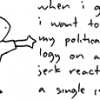
There’s all this rubbish at the moment about people moving beyond ideology. At the Jobs Summit, attendees were harangued to ‘leave your ideology at the door’. Everything I’m hearing out of the Summit says they haven’t. The business leaders want weaker work rights, lower tax, and subsidies. The few workers’ representatives that were invited want […]
Emigration still trendy
Written By: - Date published: 1:15 pm, February 27th, 2009 - 23 comments
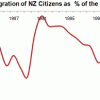
Herald: “Almost 1000 a week leaving for Australia. The flood of migrants across the Tasman continues unabated, with latest figures showing New Zealanders leaving at a rate approaching 1000 a week, breaking a 20-year record.” But, guys, come back. We’ve got a National government. No more of ‘that woman’, no more CFLs, no more nanny state and we’ve […]
The cost of doing (next to) nothing
Written By: - Date published: 11:26 am, February 27th, 2009 - 18 comments
Bill English is holding the country’s purse like an old woman on the subway. Far from doing what every other country is doing, injecting an adrenaline shot of spending into the economy to restore confidence by breaking the negative cycle, English is repeating the mistakes he made when he was Finance Minister during the Asian Crisis […]
Views from the Job Summit
Written By: - Date published: 10:00 am, February 27th, 2009 - 30 comments
– “Very clear that this is all about showing a consensus behind Key. That’s the mood among my colleagues. Seen some unionists about, their strategy seems to be to engage, rather than be left out” – “I saw a brown face. Turned out it was the cleaner. I hear Michael Jones is here too. So that’s […]
Previewing the jobs summit
Written By: - Date published: 5:50 pm, February 26th, 2009 - 20 comments
Tomorrow, John Key’s much anticipated jobs summit will take place. It’s a big deal, it’s got a logo and everything. Unfortunately, John seems to have left The Standard off the invite list along with all but a few unionists, the unemployed, women’s groups, and any party left of centre. If you’re going to be there, […]
A component of a component
Written By: - Date published: 4:14 pm, February 26th, 2009 - 12 comments
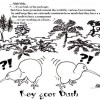
A regular reader of The Standard, Adders, has sent us in this cartoon, inspired by Key’s answers in the patsy interview with the Herald on the weekend, which reminded us of those classic Bush-isms
Electives
Written By: - Date published: 2:33 pm, February 26th, 2009 - 33 comments
If the 20 new elective surgery theatres Health Minister Tony Ryall has announced were going to be funded with new money, I would say ‘sounds good, let’s hope we can get the staff’. But Ryall is taking the money out of the existing budget and, so, I have a couple of issues to raise. Ryall continually says ‘the […]
Conferences are wasteful, unless you’re hosting
Written By: - Date published: 1:13 pm, February 26th, 2009 - 16 comments

Lyndon Hood does it again: The National Government has cancelled another conference, with Prime Minister John Key describing it as “a waste of public money at a critical time”. During a line-by-line review of spending by the department of Prime Minister and Cabinet, Mr Key discovered the so-called “Summit on Employment”, which was to be held […]
What’s Bill planning?
Written By: - Date published: 9:20 am, February 26th, 2009 - 10 comments
Yesterday, Finance Minister Bill English made a big deal over the loss the New Zealand Superannuation Fund incurred last year. When you don’t need the money for twenty years, the current value of your asset is irrelevant. When there’s a boom on the paper value of what you have will skyrocket, when there’s a bust […]
Don’t kill the Cullen Fund
Written By: - Date published: 9:45 am, February 24th, 2009 - 46 comments
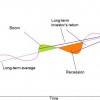
Michael Littlewood has made a career of advocating superannuation privatisation and is part of an international organisation called Pension Reforms dedicated to the privatisation of superannuation. Yesterday, he was given a platform in the Herald and on the news (one or three, can’t remember), to argue the New Zealand Superannuation Fund (known as the Cullen […]
The ink’s red, there’s less of it, and no-one’s reading it
Written By: - Date published: 7:55 pm, February 23rd, 2009 - 17 comments
New circulation figures show that the number of papers sold by the major dailies continues to slide. In 2007, the big three (Herald, Dom, Press) published 384,037 papers a day on average each. Now, that’s down to 358,047. Last year alone, circulation fell nearly 24,000 or 6%. Of more importance for papers’ revenue than circulation […]
DL Wellington with Grant Robertson
Written By: - Date published: 4:24 pm, February 23rd, 2009 - 4 comments

Under Patrick’s iron fist, things seem much more organised with DL Wellington. For just about the first time ever, there will be a DL a fortnight after the previous one, as they originally planned. This Thursday, Wellington Central’s new MP, Labour’s Grant Robertson will be speaking. So, if you like Wellington or you like drinking […]
Fitzsimons to step down from Greens’ co-leadership
Written By: - Date published: 1:54 pm, February 23rd, 2009 - 20 comments

Jeanette has announced she will be stepping down at co-leader of the Greens. Technically, she will just not be putting her name up for re-election – the Greens elect/re-confirm their leaders at their annual conference (the only party that elects their leaders with the votes of the membership, not just the MPs). Jeanette has made […]
Being stupid on the economy
Written By: - Date published: 10:02 am, February 23rd, 2009 - 20 comments
Brian Fallow has some extraordinarily good analysis of the economic situation in his piece today. Here’s some important passages (and my, unfortunately, extensive comments): “We are really talking about two recessions back to back,” AXA Global Investors chief economist Bevan Graham said. “Last year it was a domestic one, that we needed to have. There […]
- The wrong direction
 Some good news on climate change today: the energy transition away from fossil fuels is picking up speed, and renewables now make up 30% of global electricity supply. Meanwhile, in Aotearoa, we're moving in the opposite direction, with Genesis Energy announcing that it will resume importing Indonesian coal. Their official ...2 hours ago
 - National hates democracyIts a law like gravity: whenever a right-wing government is elected, they start attacking democracy. And now, after talking to their Republican and Tory and Fidesz chums at the International Democracy Union forum in Wellington, National is doing it here, announcing plans to remove election-day enrolment. Or, to put it ...3 hours ago
- No Tikanga Please, We're Lawyers.
 Yesterday Winston Peters focussed his attention on the important matter at hand. Tweeting. Like the former, and quite possibly next, orange POTUS, from whom he takes much of his political strategy, Winston is an avid X’er.His message didn’t resemble an historic address this time. In fact it was more reminiscent ...4 hours ago
 - Member’s DayToday is a Member's Day, and it seems we've entered the slowdown as things emerge from select committee. First up is the committee stage of Greg O'Connor's Child Protection (Child Sex Offender Government Agency Registration) (Overseas Travel Reporting) Amendment Bill, which will be followed by the second readings of Stuart ...5 hours ago
- Hurrah for coal – Shane Jones welcomes Genesis Energy’s import plans as natural gas production s...
 Buzz from the Beehive A significant decline in natural gas production has given Resources Minister Shane Jones an opportunity to reiterate his enthusiasm for the mining and burning of coal. For good measure, he has praised an announcement from Genesis Energy that it will resume importing coal. He and Energy ...5 hours ago
 - Bryce Edwards: Following the political money
 “Follow the money” is the classic directive to journalists trying to understand where power and influence lie in society. In terms of uncovering who influences various New Zealand political parties and governments, it therefore pays to look at who is funding them. The political parties are legally obliged to make ...5 hours ago
 - A Left-Right ranking of universities in NZ: a practical guide for students and parents
 Rob MacCullough writes – Here is my subjective ranking on a “most-left” to “most-right” scale of most of our major NZ Universities, with some anecdotal (and at times amusing) evidence to back up the claim. Extreme Left Auckland University of Technology Evidence The ...7 hours ago
 - Inflation and GST thresholdsEric Crampton writes – I hadn’t thought about this one until a helpful email showed up in my inbox.It’s pretty obvious that income tax thresholds should automatically index with inflation – whether to anchor the thresholds in percentiles of the income distribution, or to anchor against a real ...7 hours ago
- Green Party grapples with persistent scandalsJacqui Van Der Kaay writes – Parliament’s speaker had no option but to refer Green MP Julie Anne Genter to the Privileges Committee for her behaviour in the House last Wednesday evening. The incident, in which she crossed the floor to wave a book and yell at National ...7 hours ago
- A law school to be avoided – Auckland University of TechnologyGary Judd writes – The Dean of the law school at the Auckland University of Technology is someone called Khylee Quince. I have been sent her social media posting in which she has, over the LawNews headline “Senior King’s Counsel files complaint about compulsory tikanga Maori studies for ...7 hours ago
- 17 people in Malaita stand in way of China’s takeover of the SolomonsCleo Paskal writes – WASHINGTON, D.C.: ‘Many of us have received phone calls from [the opposing camp] telling them if they join the camp they will be given projects for their wards and $300,000 [around US$35,000] each’, says former Malaita Premier Daniel Suidani. The elections in Solomon Islands aren’t ...8 hours ago
- Gordon Campbell on the Hamas Ceasefire Offer, and Mark Mitchell’s Incompetence
 With hindsight, it was inevitable that (a) Hamas would agree to the ceasefire deal brokered by Egypt and Qatar and that ( b) Israel would then immediately launch attacks on Rafah, regardless. We might have hoped the concessions made by Hamas would cause Israel to desist from slaughtering thousands more ...9 hours ago
 - Bernard’ s Dawn Chorus & Pick ‘n’ Mix for Wednesday May 8
 Placards and mourners outside the Kilbirnie Mosque following the Christchurch terror attack: MSD has terminated the Kaiwhakaoranga service, which has been used by 415 families since the attacks. Photo: Lynn GrievesonTL;DR: The Government’s pledge to only cut ‘back office’ staff rather than ‘frontline’ services is on increasingly shaky ground, with ...9 hours ago
 - A few PT announcements
 There’s been a few smaller public transport announcements over the last week or so that I thought I’d cover in a single post. Fareshare I’ve long called for Auckland Transport to offer a way to enable employer-subsidised public transport options. The need for this took on even more importance ...9 hours ago
 - Jacqui Van Der Kaay: Green Party grapples with persistent scandalsParliament’s speaker had no option but to refer Green MP Julie Anne Genter to the Privileges Committee for her behaviour in the House last Wednesday evening. The incident, in which she crossed the floor to wave a book and yell at National Minister Matt Doocey, reflects poorly on Genter and ...9 hours ago
- At a glance – Tree ring proxies and the divergence problem
 On February 14, 2023 we announced our Rebuttal Update Project. This included an ask for feedback about the added "At a glance" section in the updated basic rebuttal versions. This weekly blog post series highlights this new section of one of the updated basic rebuttal versions and serves as a ...22 hours ago
 - Nothing to sneer at
 Who likes being sneered at? Nobody. Worse yet, when the sneerer has their facts all wrong, and might well be an idiot.The sneer in question is The adults are in charge now, and it is a sneer offered in retort to criticism of this new Government, no matter how well ...1 day ago
 - Still on their bullshitWhen in government, Labour pushed to extend the Parliamentary term to four years, to reduce accountability and our ability to vote out a bad government. And now, they're trying to do it through the member's ballot, with a Four-Year Parliamentary Term Legislation Bill. The bill at least requires a referendum ...1 day ago
- DrawnA ballot for a single Member's Bill was held today, and the following bill was drawn: Public Works (Prohibition of Compulsory Acquisition of Māori Land) Amendment Bill (Hūhana Lyndon) The bill would prevent the government from stealing Māori land in breach of Te Tiriti o Waitangi. It ...1 day ago
- A nod and a wink that will unnecessarily cost Aucklanders tens of millions per yearSimeon Brown, alongside Wayne Brown, is favouring a political figleaf now in exchange for loading up tens of millions in extra interest costs on Auckland ratepayers. Photo: Lynn GrievesonTL;DR: Ratings agency Standard & Poor’s is pushing back hard at suggestions from Local Government Minister Simeon Brown and Mayor Wayne Brown ...1 day ago
- Correcting the Corrections announcement – a fiscal farce that should bother the OECDBuzz from the Beehive One headline-grabber from the Beehive yesterday was the OECD’s advice that the government must bring the Budget deficit under control or face higher interest rates. Another was the announcement of a $1.9 billion “investment” in Corrections over the next four years. In the best interests of ...1 day ago
- Like it or not, the Kiwis are either going into ‘Pillar 2’ – or they are going to ChinaChris Trotter writes – Had Zheng He’s fleet sailed east, not west, in the early Fifteenth Century, how different our world would be. There is little reason to suppose that the sea-going junks of the Ming Dynasty, among the largest and most sophisticated sailing vessels ever constructed, would have failed ...1 day ago
- A balanced and an unbalanced articleDavid Farrar writes – Two articles give a useful contrast in balance. Both seek to be neutral explainer articles. This one in the Herald on Social Investment covers the pros and cons nicely. It links to critical pieces and talks about aspects that failed and aspects that are more ...1 day ago
- Deeply unserious countryEvery bit of this seems insane. And people wonder why productivity is falling through the floor. Energy News reports that the Environment Court finally threw out Allan Crafar’s appeal against a solar farm. From the story: Consent was granted in 2022. Crafar appealed November 2022. On what grounds? That ...1 day ago
- Senior King’s Counsel files complaint about compulsory tikanga Māori studies for law studentsThe tikanga regulations will compel law students to be taught that a system which does not conform with the rule of law is nevertheless law which should be observed and applied… Gary Judd KC writes – I have made a complaint to Parliament’s Regulation ...1 day ago
- https://www.greaterauckland.org.nz/?p=77196The future of Te Huia, the train between Hamilton and Auckland, has been getting a lot of attention recently as current funding for it is only in place till the end of June. The government initially agreed to a five year trial, through to April 2026, but that was subject ...1 day ago
- Bernard’s pick 'n' mix for Tuesday, May 7
 TL;DR: Hamas has just agreed to Israel’s ceasefire plan. Nelson hospital’s rebuild has been cut back to save money. The OECD suggests New Zealand break up network monopolies, including in electricity. PM Christopher Luxon’s news conference on a prison expansion announcement last night was his messiest yet.Here’s my top six ...1 day ago
 - HM Prison Aotearoa.
 A homicide in Ponsonby, a manhunt with a killer on the run. The nation’s leader stands before a press conference reassuring a frightened nation that he’ll sort it out, he’ll keep them safe, he’ll build some new prison spaces.Sorry what? There’s a scary dude on the run with a gun ...1 day ago
 - Get Your Webworm Merch!
 Hi,I know it’s been awhile since there’s been any Webworm merch — and today that all changes!Over the last four months, I’ve been working with New Zealand artist Jess Johnson to create a series of t-shirts, caps and stickers that are infused with Webworm DNA — and as of right ...1 day ago
 - Top OECD economist puts Willis between a rock and a hard placeThe OECD’s chief economist yesterday laid it on the line for the new Government: bring the deficit under control or face higher Reserve Bank interest rates for longer. And to bring the deficit under control, she meant not borrowing for tax cuts. But there was more. Without policy changes—introducing a ...1 day ago
- Media Link: “A View from Afar” on the moment of friction, and more.
 After a hiatus of over four months Selwyn Manning and I finally got it together to re-start the “A View from Afar” podcast series. We shall see how we go but aim to do 2 episodes per month if possible. … Continue reading ...2 days ago
 - Preposterous priorities – politicians preferred pastryNewsroom writer Aaron Smale, in an article triggered by the High Court’s ruling on whether a sitting MP must respond to a summons to appear before the Waitangi Tribunal, reports on issues underpinning the tribunal’s urgent inquiry into the Government’s intention to remove Section 7AA from the Oranga Tamariki ...2 days ago
- Climate Change: Forcing accountability in the UKIn 2008, the UK Parliament passed the Climate Change Act 2008. The law established a system of targets, budgets, and plans, with inbuilt accountability mechanisms; the aim was to break the cycle of empty promises and replace it with actual progress towards emissions reduction. The law was passed with near-universal ...2 days ago
- Other councils are keen to be next to strike a water deal with govtBuzz from the Beehive Local Water Done Well – let’s be blunt – is a silly name, but the first big initiative to put it into practice has gone done well. This success is reflected in the headline on an RNZ report: District mayors welcome Auckland’s new water deal with ...2 days ago
- Why India is key to heading off climate catastropheThis is a re-post from Yale Climate Connections A farmworker cleans the solar panels of a solar water pump in the village of Jagadhri, Haryana Country, India. (Photo credit: Prashanth Vishwanathan/ IWMI) Decisions made in India over the next few years will play a key role in global ...2 days ago
- Meanwhile “… the disturbing trend of increasing violence towards children continues to worsen”Lindsay Mitchell writes – The Children’s Minister, Karen Chhour, intends to repeal Section 7AA from the Oranga Tamariki Act 1989 because it creates conflict between claimed Crown Treaty obligations and the child’s best interests. In her words, “Oranga Tamariki’s governing principles and its act should be colour ...2 days ago
- New Zealand’s geopolitical friendly fire has its limitsGeoffrey Miller writes – The gloves are off. That might seem to be the undertone of surprisingly tough talk from New Zealand’s foreign and trade ministers. Winston Peters, the foreign minister, may be facing legal action after making allegations about former Australian foreign minister Bob Carr on Radio New Zealand. ...2 days ago
- The post-Covid economy: is it in another long stagnation – and if so, why?Brian Easton writes – This is about the time that the Treasury will be locking up its economic forecasts to be published in the 2024 Budget Economic and Fiscal Update (BEFU) on budget day, 30 May. I am not privy to what they will be (I will report on them ...2 days ago
- On the LTP 2024 FeedbackA few weeks ago Auckland Council released the results of consultation on the Long Term Plan (LTP) that occurred in March. With almost 28,000 submissions, it received the most feedback of any LTP in Auckland. It covered a wide range of topics soliciting feedback on different areas of council funded ...2 days ago
- Bernard’s pick 'n' mix for Monday, May 6
 TL;DR: Winston Peters is reported to have won a budget increase for MFAT. David Seymour wanted his Ministry of Regulation to be three times bigger than the Productivity Commission. Simeon Brown is appointing a Crown Monitor to Watercare to protect the Claytons Crown Guarantee he had to give ratings agencies ...2 days ago
 - Geoffrey Miller: New Zealand’s geopolitical friendly fire has its limitsThe gloves are off. That might seem to be the undertone of surprisingly tough talk from New Zealand’s foreign and trade ministers. Winston Peters, the foreign minister, may be facing legal action after making allegations about former Australian foreign minister Bob Carr on Radio New Zealand. Carr had made highly ...2 days ago
- I could be a Florist.
 I could be a florist'Round the corner from Rye LaneI'll be giving daisies to craziesBut, baby, I'll wrap you up real safe Oh, I can give you flowers At the end of every dayFor the center of your table, a rainbowIn case you have people 'round to stay Depending on ...2 days ago
 - The Kaka’s diary for the week to May 12 and beyond
 TL;DR: The six key events to watch in Aotearoa-NZ’s political economy in the week to May 12 include:PM Christopher Luxon is scheduled to hold a post-Cabinet news conference at 4 pm today. Finance Minister Nicola Willis will give a pre-budget speech on Thursday.Parliament sits from Question Time at 2pm on ...2 days ago
 - Willis on defenceThe price of the foreign affairs “reset” is now becoming apparent, with Defence set to get a funding boost in the Budget. Finance Minister Nicola Willis has confirmed that it will be one of the few votes, apart from Health and Education and possibly Police, which will get an increase ...2 days ago
- 2024 SkS Weekly Climate Change & Global Warming News Roundup #18A listing of 26 news and opinion articles we found interesting and shared on social media during the past week: Sun, April 28, 2024 thru Sat, May 4, 2024. Story of the week "It’s straight out of Big Tobacco’s playbook. In fact, research by John Cook and his colleagues ...3 days ago
- A prerequisite for Vulture Capitalism.
 Yesterday I received come lovely feedback following my Star Wars themed newsletter. A few people mentioned they’d enjoyed reading the personal part at the beginning.I often begin newsletters with some memories, or general thoughts, before commencing the main topic. This hopefully sets the mood and provides some context in which ...3 days ago
 - Early evening, April 30
 April 30 was going to be the day we’d be calling Mum from London to wish her a happy birthday. Then it became the day we would be going to St. Paul's at Evensong to remember her. The aim of the cathedral builders was to find a way to make their ...3 days ago
 - Do Newsroom’s staff think they’re culturally superior to the rest of us? Are they arguing that A...Rob MacCulloch writes – Can’t remember the last book by a Kiwi author you read? Think the NZ government should spend less on the arts in favor of helping the homeless? If so, as far as Newsroom is concerned, you probably deserve to be called a cultural ignoramus ...4 days ago
- Fun minor grudgesEric Crampton writes – Grudges are bad. Better to move on. But it can be fun to keep a couple of really trivial ones, so you’re not tempted to have other ones. For example, because of the rootkit fiasco of 2005, no Sony products in our household. ...4 days ago
- Bernard’s dawn chorus for Saturday, May 4 and pick ‘n’ mix for the weekendA new report warns an estimated third of the adult population have unmet need for health care. Photo: Lynn Grieveson / The KākāHere’s the six key things I learned about Aotaroa’s political economy this week around housing, climate and poverty:Politics - Three opinion polls confirmed support for PM Christopher Luxon ...4 days ago
- The Dark Side and the Rebel Alliance.
 Today is May the fourth. Which was just a regular day when my mother took me to see the newly released Star Wars at the Odeon in Rotorua. The queue was right around the corner. Some years later this day became known as Star Wars Day, the date being a ...4 days ago
 - Imaginary mandate, imaginary leadership
 Hello! Here comes the Saturday edition of More Than A Feilding, catching you up on the past week’s editions.ShareVerity, Ilfracombe ...4 days ago
 - Winston Peters delivers a speech about NZ’s relationship with China but media focus on Bob Carr’...Buzz from the Beehive Much more media attention is being paid to something Winston Peters said about former Australian Foreign Minister Bob Carr than to a speech he delivered to the New Zealand China Council. One word is missing from the speech: AUKUS. But AUKUS loomed large in his considerations ...5 days ago
- The Post-Covid Economy
 Is the economy in another long stagnation? If so, why?This is about the time that the Treasury will be locking up its economic forecasts to be published in the 2024 Budget Economic and Fiscal Update (BEFU) on budget day, 30 May. I am not privy to what they will be ...5 days ago
 - An awkward coincidence!The annual list of who's been bribing our politicians is out, and journalists will no doubt be poring over it to find the juiciest and dirtiest bribes. The government's fast-track invite list is likely to be a particular focus, and we already know of one company on the list which ...5 days ago
- The Israel/Palestinian metastasis.In the weeks after the October 7 Hamas attacks on Southern Israel I wrote about the possible 2nd, 3rd and even 4th order effects of the conflict. These included new fronts being opened in the West Bank (with Hamas), Golan … Continue reading ...5 days ago
- 27,000That's the number of submissions received on National's corrupt Muldoonist fast-track legislation. Except its higher than that, because the number doesn't include form submissions, such as the 15,000 people who supported Forest & Bird's submission, or the 14,000 who supported Greenpeace. And so many people want to appear in person ...5 days ago
- MPs’ salaries – when is the best time to increase them?Peter Dunne writes – It is one of the oldest truisms that there is never a good time for MPs to get a pay rise. This week’s announcement of pay raises of around 2.8% backdated to last October could hardly have come at a worse time, with the ...5 days ago
- Genter under fireDavid Farrar writes – Newshub reports: Newshub can reveal a fresh allegation of intimidation against Green MP Julie-Anne Genter. Genter is subject to a disciplinary process for aggressively waving a book in the face of National Minister Matt Doocey in the House – but it’s not the first time ...5 days ago
- New Treasury paper on the productivity slowdown supports the downgrading of forecastsThe Treasury has published a paper today on the global productivity slowdown and how it is playing out in New Zealand: The productivity slowdown: implications for the Treasury’s forecasts and projections. The Treasury Paper examines recent trends in productivity and the potential drivers of the slowdown. Productivity for the whole economy ...5 days ago
- Bernard’s pick 'n' mix for Friday, May 3
 TL;DR: Here’s my top 10 ‘pick ‘n’ mix of links to news, analysis and opinion articles as of 9:26 am on Friday, May 3:Climate 'Ministerial override must go' - Hearings begin over fast-track bill RNZ Kate GreenPopulation: Labour hire firm struggling to find staff as Australia lures away workers. HireStaff ...5 days ago
 - Weekly Roundup 3-May-2024Here we are in May already! And here are a few of the stories that caught our eye this week. This Week on Greater Auckland On Monday, Matt highlighted that it’s been a decade since Auckland’s rail system was electrified. On Wednesday, Matt looked at AT’s rollout of new ways ...5 days ago
- The Hoon around the week to May 35 days ago
- Pamphlets at Ten Paces.
 These puppet strings don't pull themselvesYou're thinking thoughts from someone elseHow much time do you think you have?Are you prepared for what comes next?The debating chamber can be a trying place for an opposition MP. What with the person in charge, the speaker, typically being an MP from the governing ...5 days ago
 - A land without pier
 The land around Lyme Regis, where Meryl Streep once stood, in a hood, on the Cobb, is falling into the sea.MerylThe land around Lyme Regis, around the Cobb that made it rich, has always been falling slowly but surely into the sea. Read more ...5 days ago
 - Skeptical Science New Research for Week #18 2024Open access notables Generative AI tools can enhance climate literacy but must be checked for biases and inaccuracies, Atkins et al., Communications Earth & Environment: In the face of climate change, climate literacy is becoming increasingly important. With wide access to generative AI tools, such as OpenAI’s ChatGPT, we explore the potential ...6 days ago
- Ruckus over AUKUS – Labour demands Peters step down as Foreign Minister, but he still had the job ...Buzz from the Beehive Foreign Affairs Minister Winston Peters was bound to win headlines when he set out his thinking about AUKUS in his speech to the New Zealand Institute of International Affairs. The headlines became bigger when – during an interview on RNZ’s Morning Report today – he criticised ...6 days ago
- Secrecy undermines participationThe Post reports on how the government is refusing to release its advice on its corrupt Muldoonist fast-track law, instead using the "soon to be publicly available" refusal ground to hide it until after select committee submissions on the bill have closed. Fast-track Minister Chris Bishop's excuse? “It's not ...6 days ago
- Agribusiness following oil and gas playbookAs pressure on it grows, the livestock industry’s approach to the transition to Net Zero is increasingly being compared to that of fossil fuel interests. Photo: Lynn Grieveson / Getty ImagesTL;DR: Here’s the top five news items of note in climate news for Aotearoa-NZ this week, and a discussion above ...6 days ago
- Here’s hoping they aren’t counting on a 100 per cent acceptance…The New Zealand Herald reports – Stats NZ has offered a voluntary redundancy scheme to all of its workers as a way to give staff some control over their “future” amidst widespread job losses in the public sector. In an update to staff this morning, seen by the Herald, Statistics New Zealand ...6 days ago
- Gordon Campbell on unemployment, Winston Peters’ low boiling point and music criticismOn Werewolf/Scoop, I usually do two long form political columns a week. From now on, there will be an extra column each week about music and movies. But first, some late-breaking political events: The rise in unemployment numbers for the March quarter was bigger than expected – and especially sharp ...6 days ago
- TVNZ and poll results6 days ago
- Mana or MoneyMuriel Newman writes – When Meridian Energy was seeking resource consents for a West Coast hydro dam proposal in 2010, local Maori “strenuously” objected, claiming their mana was inextricably linked to ‘their’ river and could be damaged. After receiving a financial payment from the company, however, the Ngai Tahu ...6 days ago
- Bernard’s pick 'n' mix for Thursday, May 2
 TL;DR: Here’s my top 10 ‘pick ‘n’ mix of links to news, analysis and opinion articles as of 11:10 am on Thursday, May 2:Scoop: Government sits on official advice on fast-track consent. The Ombudsman is investigating after official briefings on the contentious regime were held back despite requests from Forest ...6 days ago
 - The Art of taking no ResponsibilityAlwyn Poole writes – “An SEP,’ he said, ‘is something that we can’t see, or don’t see, or our brain doesn’t let us see, because we think that it’s somebody else’s problem. That’s what SEP means. Somebody Else’s Problem. The brain just edits it out, it’s like a ...6 days ago


- A win for Wellington – Greens welcome more housing
 The Green Party is welcoming the announcement by the Minister Responsible for RMA Reform Chris Bishop to approve most of the Wellington City Council’s District Plan recommendations. ...3 hours ago
 - Release: Backtrack on school lunches a win for Kiwi kids
 David Seymour has failed to get the sweeping cuts he wanted to the free and healthy school lunch programme, Labour education spokesperson Jan Tinetti said. ...5 hours ago
 - Release: Hon Willie Jackson to debate at the Prestigious Oxford UnionHon Willie Jackson has been invited by the Oxford Union to debate the motion “This House Believes British Museums are not Very British’ on May 23rd. ...8 hours ago
- Members Bill will prevent Māori land confiscationsGreen Party MP Hūhana Lyndon says her Public Works (Prohibition of Compulsory Acquisition of Māori Land) Amendment Bill is an opportunity to right some past wrongs around the alienation of Māori land. ...1 day ago
- TIKANGA IS NOT LAW. IT IS CULTURAL INDOCTRINATION.
 A senior, highly respected King’s Counsel with decades of experience in our law courts, Gary Judd KC, has filed a complaint about compulsory tikanga Māori studies for law students - highlighting the utter depths of absurdity this woke cultural madness has taken our society. The tikanga regulations will compel law ...1 day ago
 - Release: National won’t commit to full Nelson Hospital upgradeThe Government needs to be clear with the people of the Nelson Marlborough region about the changes it is considering for the Nelson Hospital rebuild, Labour health spokesperson Ayesha Verrall said. ...1 day ago
- Release: Labour calls for fast track list to be releasedMinisters must front up about which projects it will push through under its Fast Track Approvals legislation, Labour environment spokesperson Rachel Brooking said today. ...2 days ago
- Release: National gaslights women fighting for equal payNational has scrapped the pay equity taskforce that fights for equal pay for women and looks at ethnic pay gaps. ...6 days ago
- Release: More job cuts, fewer houses under NationalThe Government is again adding to New Zealand’s growing unemployment, this time cutting jobs at the agencies responsible for urban development and growing much needed housing stock. ...6 days ago
- Release: Children fall deeper through the cracks in Govt cutsWith Minister Karen Chhour indicating in the House today that she either doesn’t know or care about the frontline cuts she’s making to Oranga Tamariki, we risk seeing more and more of our children falling through the cracks. ...6 days ago
- Release: Labour honours memory of Sir Robert MartinThe Labour Party is saddened to learn of the death of Sir Robert Martin, a globally renowned disability advocate who led the way for disability rights both in New Zealand and internationally. ...6 days ago
- Release: 130,000 cattle saved from live exportLabour is calling for the Government to urgently rethink its coalition commitment to restart live animal exports, Labour animal welfare spokesperson Rachel Boyack said. ...1 week ago
- Central Bank makes clear Government is pouring fuel on housing crisis fireToday’s Financial Stability Report has once again highlighted that poverty and deep inequality are political choices - and this Government is choosing to make them worse. ...1 week ago
- New unemployment figures paint bleak pictureThe Green Party is calling on the Government to do more for our households in most need as unemployment rises and the cost of living crisis endures. ...1 week ago
- Release: National’s job cuts already starting to bite as unemployment risesUnemployment is on the rise and it’s only going to get worse under this Government, Labour finance spokesperson Barbara Edmonds said. Stats NZ figures show the unemployment rate grew to 4.3 percent in the March quarter from 4 percent in the December quarter. “This is the second rise in unemployment ...1 week ago
- Release: National hiking transport costs for families and young New ZealandersWeekly expenses will grow for more than 1.6 million New Zealanders as the Government ends free and half price public transport fares tomorrow. ...1 week ago
- Release: Labour welcomes EU free trade agreementThe New Zealand Labour Party welcomes the entering into force of the European Union and New Zealand free trade agreement. This agreement opens the door for a huge increase in trade opportunities with a market of 450 million people who are high value discerning consumers of New Zealand goods and ...1 week ago
- Surprise: Landlord tax cuts don’t trickle downThe Green Party is renewing its call for rent controls following reports of rental prices hitting an all-time high. ...1 week ago
- Release: $1.7b for no increase in access to medicineThe National-led Government continues its fiscal jiggery pokery with its Pharmac announcement today, Labour Health spokesperson Ayesha Verrall says. “The government has increased Pharmac funding but conceded it will only make minimal increases in access to medicine”, said Ayesha Verrall “This is far from the bold promises made to fund ...1 week ago
- Release: National should heed Tribunal warning and scrap coalition commitment with ACTThis afternoon’s interim Waitangi Tribunal report must be taken seriously as it affects our most vulnerable children, Labour children’s spokesperson Willow-Jean Prime. ...1 week ago
- Release: More accountability for preventable workplace deaths this Workers’ Memorial DayLabour is calling for more accountability for preventable workplace deaths because everybody who goes to work deserves to come home safely. ...1 week ago
- Gaza: Aotearoa Must Support Independent Investigation into Mass GravesTe Pāti Māori are demanding the New Zealand Government support an international independent investigation into mass graves that have been uncovered at two hospitals on the Gaza strip, following weeks of assault by Israeli troops. Among the 392 bodies that have been recovered, are children and elderly civilians. Many of ...2 weeks ago
- Release: Working together on consistent support for veterans this Anzac DayOur two-tiered system for veterans’ support is out of step with our closest partners, and all parties in Parliament should work together to fix it, Labour veterans’ affairs spokesperson Greg O’Connor said. ...2 weeks ago
- Release: Penny drops – but what about Seymour and Peters?Stripping two Ministers of their portfolios just six months into the job shows Christopher Luxon’s management style is lacking, Labour Leader Chris Hipkins said. ...2 weeks ago
- Another ‘Stolen Generation’ enabled by court ruling on Waitangi Tribunal summonsTonight’s court decision to overturn the summons of the Children’s Minister has enabled the Crown to continue making decisions about Māori without evidence, says Te Pāti Māori spokesperson for Children, Mariameno Kapa-Kingi. “The judicial system has this evening told the nation that this government can do whatever they want when ...2 weeks ago
- Release: Budget blunder shows Nicola Willis could cut recovery fundingIt appears Nicola Willis is about to pull the rug out from under the feet of local communities still dealing with the aftermath of last year’s severe weather, and local councils relying on funding to build back from these disasters. ...2 weeks ago
- Further environmental mismanagement on the cardsThe Government’s resource management reforms will add to the heavy and ever-growing burden this Government is loading on to our environment. ...2 weeks ago
- Release: RMA changes will be a disaster for environmentThe Government is making short-sighted changes to the Resource Management Act (RMA) that will take away environmental protection in favour of short-term profits, Labour’s environment spokesperson Rachel Brooking said today. ...2 weeks ago
- Release: Labour supports urgent changes to emergency management systemLabour welcomes the release of the report into the North Island weather events and looks forward to working with the Government to ensure that New Zealand is as prepared as it can be for the next natural disaster. ...2 weeks ago
- Release: Labour calls for New Zealand to recognise PalestineThe Labour Party has called for the New Zealand Government to recognise Palestine, as a material step towards progressing the two-State solution needed to achieve a lasting peace in the region. ...2 weeks ago
- Release: Three strikes law political posturing of worst kindThe Government is bringing back a law that has little evidential backing just to look tough, Labour justice spokesperson Duncan Webb said. ...2 weeks ago
- Release: Government cuts unbelievably target child exploitation, violent extremism, ports and airpor...Some of our country’s most important work, stopping the sexual exploitation of children and violent extremism could go along with staff on the frontline at ports and airports. ...2 weeks ago
- Three strikes has failed before and will fail againResurrecting the archaic three-strikes legislation is an unwelcome return to a failed American-style approach to justice. ...2 weeks ago
- Release: Environmental protection vital, not ‘onerous’The Government’s Fast Track Approvals Bill will give projects such as new coal mines a ‘get out of jail free’ card to wreak havoc on the environment, Labour Leader Chris Hipkins said today. ...2 weeks ago
- Ferris – Three Strikes targets those ‘too brown to be white’The government's decision to reintroduce Three Strikes is a destructive and ineffective piece of law-making that will only exacerbate an inherently biased and racist criminal justice system, said Te Pāti Māori Justice Spokesperson, Tākuta Ferris, today. During the time Three Strikes was in place in Aotearoa, Māori and Pasifika received ...2 weeks ago
- Release: Govt cuts doctors and nurses in hiring freezeCuts to frontline hospital staff are not only a broken election promise, it shows the reckless tax cuts have well and truly hit the frontline of the health system, says Labour Health spokesperson Ayesha Verrall. ...3 weeks ago
- Fast-track submissions period must be extendedThe Green Party has joined the call for public submissions on the fast-track legislation to be extended after the Ombudsman forced the Government to release the list of organisations invited to apply just hours before submissions close. ...3 weeks ago
- Release: Progress on climate will be undone by GovtNew Zealand’s good work at reducing climate emissions for three years in a row will be undone by the National government’s lack of ambition and scrapping programmes that were making a difference, Labour Party climate spokesperson Megan Woods said today. ...3 weeks ago
- Therapeutic Products Act to be repealed
 The Therapeutic Products Act (TPA) will be repealed this year so that a better regime can be put in place to provide New Zealanders safe and timely access to medicines, medical devices and health products, Associate Health Minister Casey Costello announced today. “The medicines and products we are talking about ...2 hours ago
 - Decisions on Wellington City Council’s District PlanThe Minister Responsible for RMA Reform, Chris Bishop, today released his decision on twenty recommendations referred to him by the Wellington City Council relating to its Intensification Planning Instrument, after the Council rejected those recommendations of the Independent Hearings Panel and made alternative recommendations. “Wellington notified its District Plan on ...4 hours ago
- Rape Awareness Week: Government committed to action on sexual violenceRape Awareness Week (6-10 May) is an important opportunity to acknowledge the continued effort required by government and communities to ensure that all New Zealanders can live free from violence, say Ministers Karen Chhour and Louise Upston. “With 1 in 3 women and 1 in 8 men experiencing sexual violence ...4 hours ago
- Smarter lunch programme feeds more, costs lessAssociate Education Minister David Seymour has today announced that the Government will be delivering a more efficient Healthy School Lunches Programme, saving taxpayers approximately $107 million a year compared to how Labour funded it, by embracing innovation and commercial expertise. “We are delivering on our commitment to treat taxpayers’ money ...5 hours ago
- Report provides insights into marine recoveryNew research on the impacts of extreme weather on coastal marine habitats in Tairāwhiti and Hawke’s Bay will help fishery managers plan for and respond to any future events, Oceans and Fisheries Minister Shane Jones says. A report released today on research by Niwa on behalf of Fisheries New Zealand ...7 hours ago
- NZ to send political delegation to the PacificDeputy Prime Minister and Foreign Minister Winston Peters will lead a broad political delegation on a five-stop Pacific tour next week to strengthen New Zealand’s engagement with the region. The delegation will visit Solomon Islands, Papua New Guinea, Vanuatu, New Caledonia, and Tuvalu. “New Zealand has deep and ...7 hours ago
- Low gas production threatens energy securityThere has been a material decline in gas production according to figures released today by the Gas Industry Co. Figures released by the Gas Industry Company show that there was a 12.5 per cent reduction in gas production during 2023, and a 27.8 per cent reduction in gas production in the ...12 hours ago
- Defence industry talent, commitment recognisedDefence Minister Judith Collins tonight announced the recipients of the Minister of Defence Awards of Excellence for Industry, saying they all contribute to New Zealanders’ security and wellbeing. “Congratulations to this year’s recipients, whose innovative products and services play a critical role in the delivery of New Zealand’s defence capabilities, ...20 hours ago
- Speech to the Minister of Defence Awards of Excellence for IndustryWelcome to you all - it is a pleasure to be here this evening.I would like to start by thanking Greg Lowe, Chair of the New Zealand Defence Industry Advisory Council, for co-hosting this reception with me. This evening is about recognising businesses from across New Zealand and overseas who in ...21 hours ago
- Speech to the Sixth Annual New Zealand Government Data SummitIt is a pleasure to be speaking to you as the Minister for Digitising Government. I would like to thank Akolade for the invitation to address this Summit, and to acknowledge the great effort you are making to grow New Zealand’s digital future. Today, we stand at the cusp of ...22 hours ago
- Ceasefire agreement needed now: PetersNew Zealand is urging both Israel and Hamas to agree to an immediate ceasefire to avoid the further humanitarian catastrophe that military action in Rafah would unleash, Foreign Minister Winston Peters says. “The immense suffering in Gaza cannot be allowed to worsen further. Both sides have a responsibility to ...1 day ago
- Daily school attendance data now availableA new online data dashboard released today as part of the Government’s school attendance action plan makes more timely daily attendance data available to the public and parents, says Associate Education Minister David Seymour. The interactive dashboard will be updated once a week to show a national average of how ...1 day ago
- Ambassador to United States appointedForeign Minister Winston Peters has announced Rosemary Banks will be New Zealand’s next Ambassador to the United States of America. “Our relationship with the United States is crucial for New Zealand in strategic, security and economic terms,” Mr Peters says. “New Zealand and the United States have a ...1 day ago
- New permit proposed for recreational gold miningThe Government is considering creating a new tier of minerals permitting that will make it easier for hobby miners to prospect for gold. “New Zealand was built on gold, it’s in our DNA. Our gold deposits, particularly in regions such as Otago and the West Coast have always attracted fortune-hunters. ...1 day ago
- NZ and the UAE launch FTA negotiationsMinister for Trade Todd McClay today announced that New Zealand and the United Arab Emirates (UAE) will commence negotiations on a free trade agreement (FTA). Minister McClay met with his counterpart UAE Trade Minister Dr Thani bin Ahmed Al Zeyoudi in Dubai, where they announced the launch of negotiations on a ...1 day ago
- New Zealand Sign Language Week an opportunity for anyone to signNew Zealand Sign Language Week is an excellent opportunity for all Kiwis to give the language a go, Disabilities Issues Minister Louise Upston says. This week (May 6 to 12) is New Zealand Sign Language (NZSL) Week. The theme is “an Aotearoa where anyone can sign anywhere” and aims to ...2 days ago
- Next stop NASA for New Zealand studentsSix tertiary students have been selected to work on NASA projects in the US through a New Zealand Space Scholarship, Space Minister Judith Collins announced today. “This is a fantastic opportunity for these talented students. They will undertake internships at NASA’s Ames Research Center or its Jet Propulsion Laboratory (JPL), where ...2 days ago
- $1.9 billion investment to keep NZ safe from crimeNew Zealanders will be safer because of a $1.9 billion investment in more frontline Corrections officers, more support for offenders to turn away from crime, and more prison capacity, Corrections Minister Mark Mitchell says. “Our Government said we would crack down on crime. We promised to restore law and order, ...2 days ago
- OECD reinforces need to control spendingThe OECD’s latest report on New Zealand reinforces the importance of bringing Government spending under control, Finance Minister Nicola Willis says. The OECD conducts country surveys every two years to review its members’ economic policies. The 2024 New Zealand survey was presented in Wellington today by OECD Chief Economist Clare Lombardelli. ...2 days ago
- Agreement delivers Local Water Done Well for AucklandThe Government has delivered on its election promise to provide a financially sustainable model for Auckland under its Local Water Done Well plan. The plan, which has been unanimously endorsed by Auckland Council’s Governing Body, will see Aucklanders avoid the previously projected 25.8 per cent water rates increases while retaining ...3 days ago
- Gaza and the Pacific on the agenda with GermanyForeign Minister Winston Peters discussed the need for an immediate ceasefire in Gaza, and enhanced cooperation in the Pacific with German Foreign Minister Annalena Baerbock during her first official visit to New Zealand today. "New Zealand and Germany enjoy shared interests and values, including the rule of law, democracy, respect for the international system ...4 days ago
- Decision allows for housing growth in Western Bay of PlentyThe Minister Responsible for RMA Reform, Chris Bishop today released his decision on four recommendations referred to him by the Western Bay of Plenty District Council, opening the door to housing growth in the area. The Council’s Plan Change 92 allows more homes to be built in existing and new ...5 days ago
- Speech to New Zealand China CouncilThank you, John McKinnon and the New Zealand China Council for the invitation to speak to you today. Thank you too, all members of the China Council. Your effort has played an essential role in helping to build, shape, and grow a balanced and resilient relationship between our two ...5 days ago
- Modern insurance law will protect Kiwi householdsThe Government is modernising insurance law to better protect Kiwis and provide security in the event of a disaster, Commerce and Consumer Affairs Minister Andrew Bayly announced today. “These reforms are long overdue. New Zealand’s insurance law is complicated and dated, some of which is more than 100 years old. ...6 days ago
- Government recommits to equal payThe coalition Government is refreshing its approach to supporting pay equity claims as time-limited funding for the Pay Equity Taskforce comes to an end, Public Service Minister Nicola Willis says. “Three years ago, the then-government introduced changes to the Equal Pay Act to support pay equity bargaining. The changes were ...6 days ago
- Transforming how our children learn to readStructured literacy will change the way New Zealand children learn to read - improving achievement and setting students up for success, Education Minister Erica Stanford says. “Being able to read and write is a fundamental life skill that too many young people are missing out on. Recent data shows that ...6 days ago
- NZ not backing down in Canada dairy disputeTrade Minister Todd McClay says Canada’s refusal to comply in full with a CPTPP trade dispute ruling in our favour over dairy trade is cynical and New Zealand has no intention of backing down. Mr McClay said he has asked for urgent legal advice in respect of our ‘next move’ ...6 days ago
- Stronger oversight for our most vulnerable childrenThe rights of our children and young people will be enhanced by changes the coalition Government will make to strengthen oversight of the Oranga Tamariki system, including restoring a single Children’s Commissioner. “The Government is committed to delivering better public services that care for our most at-risk young people and ...6 days ago
- Streamlining Building Consent ChangesThe Government is making it easier for minor changes to be made to a building consent so building a home is easier and more affordable, Building and Construction Minister Chris Penk says. “The coalition Government is focused on making it easier and cheaper to build homes so we can ...6 days ago
- Minister acknowledges passing of Sir Robert Martin (KNZM)New Zealand lost a true legend when internationally renowned disability advocate Sir Robert Martin (KNZM) passed away at his home in Whanganui last night, Disabilities Issues Minister Louise Upston says. “Our Government’s thoughts are with his wife Lynda, family and community, those he has worked with, the disability community in ...7 days ago
- Speech to New Zealand Institute of International Affairs, Parliament – Annual Lecture: Challenges ...Good evening – Before discussing the challenges and opportunities facing New Zealand’s foreign policy, we’d like to first acknowledge the New Zealand Institute of International Affairs. You have contributed to debates about New Zealand foreign policy over a long period of time, and we thank you for hosting us. ...7 days ago
- Accelerating airport security linesFrom today, passengers travelling internationally from Auckland Airport will be able to keep laptops and liquids in their carry-on bags for security screening thanks to new technology, Transport Minister Simeon Brown says. “Creating a more efficient and seamless travel experience is important for holidaymakers and businesses, enabling faster movement through ...1 week ago
- Community hui to talk about kina barrensPeople with an interest in the health of Northland’s marine ecosystems are invited to a public meeting to discuss how to deal with kina barrens, Oceans and Fisheries Minister Shane Jones says. Mr Jones will lead the discussion, which will take place on Friday, 10 May, at Awanui Hotel in ...1 week ago
- Kiwi exporters win as NZ-EU FTA enters into forceKiwi exporters are $100 million better off today with the NZ EU FTA entering into force says Trade Minister Todd McClay. “This is all part of our plan to grow the economy. New Zealand's prosperity depends on international trade, making up 60 per cent of the country’s total economic activity. ...1 week ago
- Mining resurgence a welcome signThere are heartening signs that the extractive sector is once again becoming an attractive prospect for investors and a source of economic prosperity for New Zealand, Resources Minister Shane Jones says. “The beginnings of a resurgence in extractive industries are apparent in media reports of the sector in the past ...1 week ago
- Ō-Rākau Remembrance Bill passes first readingThe return of the historic Ō-Rākau battle site to the descendants of those who fought there moved one step closer today with the first reading of Te Pire mō Ō-Rākau, Te Pae o Maumahara / The Ō-Rākau Remembrance Bill. The Bill will entrust the 9.7-hectare battle site, five kilometres west ...1 week ago
- Government to boost public EV charging networkEnergy Minister Simeon Brown has announced 25 new high-speed EV charging hubs along key routes between major urban centres and outlined the Government’s plan to supercharge New Zealand’s EV infrastructure. The hubs will each have several chargers and be capable of charging at least four – and up to 10 ...1 week ago
- Residential Property Managers Bill to not progressThe coalition Government will not proceed with the previous Government’s plans to regulate residential property managers, Housing Minister Chris Bishop says. “I have written to the Chairperson of the Social Services and Community Committee to inform him that the Government does not intend to support the Residential Property Managers Bill ...1 week ago
- Independent review into disability support servicesThe Government has announced an independent review into the disability support system funded by the Ministry of Disabled People – Whaikaha. Disability Issues Minister Louise Upston says the review will look at what can be done to strengthen the long-term sustainability of Disability Support Services to provide disabled people and ...1 week ago
- Justice Minister updates UN on law & order planJustice Minister Paul Goldsmith has attended the Universal Periodic Review in Geneva and outlined the Government’s plan to restore law and order. “Speaking to the United Nations Human Rights Council provided us with an opportunity to present New Zealand’s human rights progress, priorities, and challenges, while responding to issues and ...1 week ago
- Australia’s Eurovision entry this year is the first to sing in First Nations language: meet Electr...
 Source: The Conversation (Au and NZ) – By Myfany Turpin, Associate Professor, Ethnomusicology, Linguistics and Ethnobiology, University of Sydney The act representing Australia at this year’s Eurovision contest has sadly not qualified for the grand final. Yet for Zaachariaha Fielding and Michael Ross, the duo that makes up Electric Fields, ...46 mins ago
 - Labour claims win as govt commits to new free school lunches model
 The Labour Party is claiming a win for its campaign that the government commit to keeping and funding free school lunches. ...48 mins ago
 - A definitive list of woke and non-woke foods
 In announcing changes to the school lunches programme, David Seymour said kids would no longer be served ‘woke’ foods. To clear up any confusion, The Spinoff has compiled a guide to the wokeness levels of some common food items. Apple = NOT WOKE Avocado = WOKE Avocado, smashed = EVEN ...2 hours ago
 - Future of the planet more important than the Greens survival, former co-leader James Shaw saysFormer Green Party co-leader James Shaw calls out tribalism and hyper-partisanship - including in his own party. ...2 hours ago
- Fourth urgent inquiry by the Waitangi Tribunal, this time on Māori wardsThe Tribunal is conducting another urgent inquiry into plans to require councils to hold a binding referendum on Māori wards. ...2 hours ago
- NCSC Briefs IPAC Representatives On Response To Malicious Cyber Activity
 The Minister Responsible for GCSB and the Inspector-General of Intelligence and Security have been notified of this review, and have been provided a finalised Terms of Reference. ...2 hours ago
 - How is China being taught at Australian universities? And why does this matter? Here’s what our re...Source: The Conversation (Au and NZ) – By Minglu Chen, Senior Lecturer, Government and International Relations, University of Sydney Robert Way/Shutterstock As the past few years have illustrated so clearly, the Australia-China relationship is complicated. As such, it is crucial for Australians to develop a more nuanced understanding of ...2 hours ago
- Saving the Mary River turtle: how the people of Tiaro rallied behind an iconic speciesSource: The Conversation (Au and NZ) – By Mariana Campbell, Research Lecturer, Conservation, Charles Darwin University Marilyn Connell Australian freshwater turtles are facing an alarming trend. Almost half of these species are listed as vulnerable, endangered or critically endangered. The Mary River turtle (Elusor macrurus) is one of Australia’s ...2 hours ago
- Why are algorithms called algorithms? A brief history of the Persian polymath you’ve likely never ...Source: The Conversation (Au and NZ) – By Debbie Passey, Digital Health Research Fellow, The University of Melbourne Algorithms have become integral to our lives. From social media apps to Netflix, algorithms learn your preferences and prioritise the content you are shown. Google Maps and artificial intelligence are nothing without ...3 hours ago
- Neuroaffirming care values the strengths and differences of autistic people, those with ADHD or othe...Source: The Conversation (Au and NZ) – By Josephine Barbaro, Associate Professor, Principal Research Fellow, Psychologist, La Trobe University Unsplash We’ve come a long way in terms of understanding that everyone thinks, interacts and experiences the world differently. In the past, autistic people, people with attention deficit hyperactive disorder ...3 hours ago
- ‘Reckless’ kina devaluation spells disaster for PNG, says NomanePNG Post-Courier Papua New Guinea’s deputy opposition leader James Nomane has accused the government of “reckless economic management” that has forced devaluation to manage loan repayments in foreign currency and placate the International Monetary Fund (IMF). Prime Minister James Marape “must stop lying to the people of Papua New Guinea”, ...3 hours ago
- Modernising Census – Stats NZFrom today, members of the public can have their say on what Aotearoa New Zealand’s census could look like in the future. ...3 hours ago
- ‘I do love a good funnysad novel’: Jane Arthur on her favourite booksWelcome to The Spinoff Bookseller Confessional, in which we get to know Aotearoa’s booksellers. This week: Jane Arthur, author of Brown Bird, and former bookseller at Good Books. The book I wish I’d written I have been working on not comparing myself to others. On accepting that what I can ...3 hours ago
- RMA Minister rejects Wellington council's bid to remove heritage protections from buildingsCouncil did not provide sufficient evidence to support its reasons for removing the 10 buildings from the Heritage schedule, Chris Bishop says. ...3 hours ago
- War for Wellington: Minister approves sweeping upzoning, rejects heritage changesThe final decision on the Wellington District Plan makes it official: High-density housing is legal across most of Wellington. Housing minister Chris Bishop has announced his decision on the Wellington District Plan, approving a series of amendments to radically upzone most of Wellington, allowing tens of thousands of new townhouses ...4 hours ago
- Bryce Edwards Analysis – Following the political moneyAnalysis by Dr Bryce Edwards – Democracy Project (https://democracyproject.nz) Political scientist, Dr Bryce Edwards. “Follow the money” is the classic directive to journalists trying to understand where power and influence lie in society. In terms of uncovering who influences various New Zealand political parties and governments, it therefore pays to ...4 hours ago
- Free school lunches: Year 7 students and above to shift to alternative modelA new interim delivery model will kick in next year to allow time for a full redesign of the scheme before any more money is dedicated. ...4 hours ago
- Rafah ‘last place of safety’ in Gaza, UN aid boss warnsRNZ News As Israel presses ahead with strikes in Rafah and seizing the Rafah crossing from Egypt, aid agencies are sounding the alarm of a “catastrophic humanitarian situation”. Rafah was “significant” because it was the only part in Gaza that had not been terribly damaged by the conflict, United Nations ...5 hours ago
- Foreign Affairs minister to lead Pacific delegationThe Foreign Affairs minister is heading on a five-stop Pacific tour, which he says will strengthen New Zealand's engagement in the region. ...5 hours ago
- Why we’re fighting to save Te Huia, the Hamilton-Auckland trainWith funding set to be scrapped for the Hamilton-Auckland commuter train, Te Huia enthusiast Georgie Dansey argues for it to be thrown a lifeline. It’s 5.45am and the chain of my crappy old bike falls off slugging up the one hill in Hamilton. I contemplate yeeting the bike into the ...5 hours ago
- Greens Call On Government To Keep Same-day Election Enrolment And VotingOn Radio New Zealand this morning, the Justice Minister stated the Government was considering ending election day enrolments. ...5 hours ago
- Many people are feeling ecological grief. How can we help those whose work puts them at risk?Source: The Conversation (Au and NZ) – By Anna Cooke, Honorary Fellow, School of the Environment, The University of Queensland We feel ecological grief when we lose places, species or ecosystems we value and love. These losses are a growing threat to mental health and wellbeing globally. We all see ...5 hours ago
- Revitalizing Toronto’s downtown core after COVID-19 greatly benefits the city and the regionSource: The Conversation (Au and NZ) – By Shauna Brail, Associate Professor, Institute for Management & Innovation, University of Toronto A shift to hybrid and remote work continues to affect worker presence in Toronto’s downtown. (Shutterstock) Downtown Toronto, the core of Canada’s largest city, continues to reel from the lingering ...5 hours ago
- Government quiet on costs, building plan for Waikato prison expansionThe extra beds would take longer than the four-years covered in this week's budget announcement to deliver, the Corrections Minister told RNZ. ...6 hours ago
- Chief Electoral Officer Needs To Fall On His SwordResponding to an Auditor-General's report slamming failures in the administration of the 2023 General Election, Taxpayers’ Union Policy and Public Affairs Manager, James Ross, said: ...6 hours ago
- How many productivity apps do I have to use to become more productive?Productivity apps now make up a big chunk of the software market. But do they work? And why do they all have AI integrations? Despite being firmly on the record as a physical planner fan, I sometimes dream of something better than my pretty diary and its scrawled, ugly, interior ...6 hours ago
- Government considers removing election day voter enrolmentJustice Minister Paul Goldsmith says very few countries allow it, and New Zealand should consider changing the rules. ...7 hours ago
- Beehive Need To Lead By ExampleThe Taxpayers’ Union says the Beehive need to lead by example, following reports of more than $50,000 spent upgrading video conferencing equipment and furniture in the Prime Minister’s office. Taxpayers’ Union Campaign Manager, Connor Molloy, ...7 hours ago
- The Spinoff Power List: 50 New Zealanders you need to knowAn objective list of the 50 most powerful people in New Zealand, as judged by the Spinoff Editorial Board. It’s power list season, baby, and we want in on the action. Sure, there’s the rich list and the powerful “c-suite” list and the young people with power (hmmm) but here, ...8 hours ago
- First Nations imprisonment is already at a record high. Unless government policy changes, it will on...Source: The Conversation (Au and NZ) – By Thalia Anthony, Professor of Law, University of Technology Sydney Shutterstock This article contains information on deaths in custody and the names of deceased people, and describes ongoing colonial violence towards Aboriginal and Torres Strait Islander people. First Nations people in Australia ...8 hours ago
- Martha isn’t Baby Reindeer’s biggest villain. So why is she painted as such?Source: The Conversation (Au and NZ) – By Alex Simpson, Senior Lecturer in Criminology, Macquarie University Netflix Baby Reindeer’s phenomenal success has much to do with its writer and lead, Richard Gadd, who plays Donny in a tender semi-autobiographical account of sexual abuse, harassment and stalking. Gadd’s story has ...8 hours ago
- Yes, adults can develop food allergies. Here are 4 types you need to know aboutSource: The Conversation (Au and NZ) – By Clare Collins, Laureate Professor in Nutrition and Dietetics, University of Newcastle KarolinaGrabowska/Pexels If you didn’t have food allergies as a child, is it possible to develop them as an adult? The short answer is yes. But the reasons why are much ...9 hours ago
- An outsider on the inside: how Ans Westra created New Zealand’s ‘national photo album’Source: The Conversation (Au and NZ) – By Paul Moon, Professor of History, Auckland University of Technology Ans Westra, self-portrait, c. 1963. National Library ref AWM-0705-F They try but invariably fail – those writers who believe they are capable of encapsulating in prose or verse the essence of ...9 hours ago
- How the lessons from Covid-19 could help us prepare for bird fluStewart Sowman-Lund looks at the growing concern around the world in this extract from The Bulletin. To receive The Bulletin in full each weekday, sign up here. What’s all this? When Covid-19 arrived on our shores in early 2020, some argued we were too slow, or crucially, ill-prepared for a pandemic. So ...10 hours ago
- As climate change amplifies urban flooding, here’s how communities can become ‘sponge cities’Source: The Conversation (Au and NZ) – By Franco Montalto, Professor of Civil, Architectural and Environmental Engineering and Director, Sustainable Water Resource Engineering Laboratory, Drexel University Water runs into a storm drain in a Los Angeles alley on Aug. 19, 2023, during Tropical Storm Hilary. Citizen of the Planet/Universal Images ...10 hours ago
- Genesis Energy to fire up coal imports, citing increased demand, dwindling gas supplyGenesis Energy is to resume importing coal, as reduced gas supplies and increased demand add to the problems of keeping the lights on. ...10 hours ago
- The Boy in the Water: ‘Someone was struggling at a fence’
 The inquest into the death of Gore toddler Lachlan Jones has turned up a new witness who says he saw two teenagers and a small child in a high vis vest in the area where the boy’s body was found the day he died. Lachie’s body was discovered face up ...10 hours ago
 - Te Pāti Māori comments: 'That kind of language isn't helpful'Political parties have roundly criticised Te Pāti Māori for using words like 'extermination' and 'white supremacy' in the House. ...11 hours ago
- Mental Health Minister Matt Doocey sought advice on ‘social impact bonds’ to fund servicesMinisters have sought advice on 'social impact bonds', which offer a potential return on private investment in public services. ...11 hours ago
- Managed retreat: How do we get out of the way of climate change?"Ad hoc" house buyouts after major disasters cannot continue, the Climate Change Minister says. ...11 hours ago
- Rules for property managers are scrapped. But what’s the worst that could happen?Stories from the tenancy trenches, featuring spider infestations, cupboard rats and same-sex discrimination. Lucy’s brother was living in a damp 1930s building in Mt Eden where “he had to tie the cupboard doors closed so the rats didn’t get in”. Although he shared custody of his six-year-old son, his property ...12 hours ago
- Explainer: What’s the deal with Auckland’s new water deal?Simeon Brown, Chris Luxon, and Wayne Brown climbed into a hole and announced a plan to solve Auckland’s water woes. This is how it’ll work. New Zealand’s pipes are munted. They’re cracked and leaking, and struggling to handle all the extra poos excreted by our rising population. It’s a big, ...12 hours ago
- Coutts’ call prompts urgent board meeting over SailGPDespite Sir Russell Coutts vowing SailGP wouldn’t return to Whakaraupō/Lyttelton Harbour, negotiations over 2025 are ongoing The post Coutts’ call prompts urgent board meeting over SailGP appeared first on Newsroom. ...12 hours ago
- Meet the man behind the Government’s education policyThe parallels between the Government’s education policy and those put forward by researcher Michael Johnston, is raising questions The post Meet the man behind the Government’s education policy appeared first on Newsroom. ...12 hours ago
- ‘We didn’t behave very well in NZ’, says Wakefield heirI knew Taika Waititi quite well when he was a kid. His mother lived in a tall narrow house in Aro St, and my youngest sister had a similar house two doors along. They were both single mums, they each had a son aged seven. Taika and my nephew Stepan ...12 hours ago
- Govt risks another Havelock North by undoing water protectionsOpinion: “As time passes, knowledge of the circumstances of the August 2016 outbreak will fade and its immediate impact will be lost.” This statement is from the 2017 report of the Official Inquiry into the Havelock North campylobacteriosis outbreak. The then National-led government established the inquiry after the outbreak left ...12 hours ago
- Where to next for the Aukus ruckus?Opinion: Nicholas Khoo looks at two key points in the high-stakes foreign policy pact debate – and asks if NZ can engage with as little drama as possible. The post Where to next for the Aukus ruckus? appeared first on Newsroom. ...12 hours ago
- Newsroom daily quiz, Wednesday 8 MayLoading…(function(i,s,o,g,r,a,m){var ql=document.querySelectorAll('A,DIV,A[data-quiz],DIV[data-quiz]'); if(ql){if(ql.length){for(var k=0;k<ql.length;k++){ql[k].id='quiz-embed-'+k;ql[k].href="javascript:var i=document.getElementById('quiz-embed-"+k+"');try{qz.startQuiz(i)}catch(e){i.start=1;i.style.cursor='wait';i.style.opacity='0.5'};void(0);"}}};i['QP']=r;i[r]=i[r]||function(){(i[r].q=i[r].q||[]).push(arguments)},i[r].l=1*new Date();a=s.createElement(o),m=s.getElementsByTagName(o)[0];a.async=1;a.src=g;m.parentNode.insertBefore(a,m)})(window,document,'script','https://take.quiz-maker.com/3012/CDN/quiz-embed-v1.js','qp'); Got a good quiz question? Send Newsroom your questions. The post Newsroom daily quiz, Wednesday 8 May appeared first on Newsroom. ...12 hours ago
- ‘Think fast and act slowly’ is failing big projectsOpinion: ‘Reference-class forecasting’ is at the heart of improving pricing a project and identifying the expected timeframe but it doesn’t appear to be in use here The post ‘Think fast and act slowly’ is failing big projects appeared first on Newsroom. ...12 hours ago
- A controversial driving exam – put to the testWhat do a sombrero in Argentina and cognitive driving tests have in common? Don’t worry, we’re not setting up a bad joke. Hinengaro Clinic dementia clinician Gregory Winkelman has the answer on today’s episode of The Detail. “We ask a patient’s spouse or son or daughter: If you went to ...12 hours ago
- A long road back to a very long jumpWellington long jumper Phoebe Edwards is back and she’s having fun again. Until this year, Edwards, a top athlete in her teens, had never competed as a senior athlete in New Zealand. In March, the 26-year-old won a national long jump title in a lifetime best of 6.28m after ...12 hours ago
- Daily crossword, Wednesday 8 MayThe post Daily crossword, Wednesday 8 May appeared first on Newsroom. ...12 hours ago
- Persistent Green Party scandals delay caucus resetAfter replacing a fifth of their caucus in just four months, the Greens’ opportunity to reset, reshuffle and refocus on the Government is quickly slipping away The post Persistent Green Party scandals delay caucus reset appeared first on Newsroom. ...12 hours ago
- From Gallipoli to Gaza: remembering the Anzacs not as a ‘coming of age’ tale but as a lesson for...ANALYSIS: By Olli Hellmann, University of Waikato When New Zealanders commemorate Anzac Day today on April 25, it’s not only to honour the soldiers who lost their lives in World War I and subsequent conflicts, but also to mark a defining event for national identity. The battle of Gallipoli against ...15 hours ago
- NZ local council calls for immediate ceasefire in Gaza as strikes hitBy Robin Martin, RNZ News reporter A New Zealand local authority, Whanganui District Council, has passed a motion calling for an immediate ceasefire in Gaza, condemnation of all acts of violence and terror against civilians on both sides of the conflict and the immediate return of hostages. It comes as ...16 hours ago
- End this ‘cruel, barbaric use of force’ on Gaza – WILPF plea to NZAsia Pacific Report The Aotearoa chapter of the Women’s International league for Peace and Freedom (WILPF) has appealed to the New Zealand government to call out Israel over the “cruel and barbaric use of force” in Gaza and demand a permanent ceasefire. The league’s open letter was sent to Prime ...16 hours ago
- Albanese government to invest $566 million for ‘generational’ mapping to promote resource explor...Source: The Conversation (Au and NZ) – By Michelle Grattan, Professorial Fellow, University of Canberra The Albanese government will invest $566 million over a decade on data, maps and other tools to promote exploration and development in Australia’s resources industry. The project will fund “the first comprehensive map of what’s ...16 hours ago
- Prison spending: Waikeria to have capacity for nearly 2000 bedsThe government has clarified just how many beds the Waikato prison will get after a series of maths gaffes - 455, 600, 810 or 1865? ...18 hours ago
- ‘Repair colonial violence’ and support Gaza ceasefire, say Otago academicsAsia Pacific Report Following an open letter by Auckland University academics speaking out in support of their students’ right to protest against the genocidal Israeli war on Gaza, a group of academics at Otago University have today also called on New Zealand academic institutions to “repair colonial violence” and end ...20 hours ago
- Expelling students for bad behaviour seems like the obvious solution, but is it really a good idea?Source: The Conversation (Au and NZ) – By Linda J. Graham, Professor and Director of the Centre for Inclusive Education, Queensland University of Technology Ryan Tauss/ Unsplash, CC BY Two male students have been expelled from a Melbourne private school for their involvement in a list ranking female students. ...20 hours ago
- Green MP Julie Anne Genter responds after behaviour in the House, florist's accusations"I can do better," she says, acknowledging the need to work on her de-escalation strategy. ...21 hours ago
- If the RBA’s right, interest rates may not fall for another year. Here’s why – and what it mea...Source: The Conversation (Au and NZ) – By Peter Martin, Visiting Fellow, Crawford School of Public Policy, Australian National University The Reserve Bank is now assuming Australians will see no interest rate cuts this year – and quite possibly none before the next federal election, due next May. That’s ...21 hours ago
- ‘Eye watering’ spending, growing debt make up surprisingly generous Victorian state budgetSource: The Conversation (Au and NZ) – By David Hayward, Emeritus Professor of Public Policy, RMIT University The Victorian budget offered more of the same on Tuesday, with the only change being how the budget papers were packaged. The usual shrink wrap was gone, hinting at savings in the pages ...21 hours ago
- Budgeting service cuts: 'It's like watching a train derail'With some services facing closure after missing out on the latest government funding, there are for some of NZ's most vulnerable. ...21 hours ago
- Coalition demands amendments to government’s deportation bill, as crucial High Court judgement set...Source: The Conversation (Au and NZ) – By Michelle Grattan, Professorial Fellow, University of Canberra The Coalition is demanding extensive amendments to the government’s legislation targeting non-citizens who refuse to co-operate with their removal. In a dissenting report to the senate inquiry into the legislation, the Coalition says it ...21 hours ago
- MP's comments 'bang on' despite negative response from other parties – Te Pāti...Te Pāti Māori is standing by comments made by MP Mariameno Kapa-Kingi which other parties have called inflammatory and offensive. ...24 hours ago
- A story of trauma, hope and regaining control, Nayika: A Dancing Girl is soul-stirring dance theatreSource: The Conversation (Au and NZ) – By Vanita Yadav, Senior Research Fellow, Urban Transformations Research Centre, Western Sydney University Brett Boardman/Belvoir The complex and grappling issue of violence against women takes centre stage in the soul-stirring solo dance drama Nayika: A Dancing Girl. During a dinner conversation ...1 day ago
- 'Pretty dire' situation for patients as junior doctors strike over pay cutsDisruption to patient care from a nationwide junior doctors strike is bordering on unsafe, a senior doctor claims, despite what health officials say. ...1 day ago
- How does the drug abemaciclib treat breast cancer?Source: The Conversation (Au and NZ) – By Sarah Diepstraten, Senior Research Officer, Blood Cells and Blood Cancer Division, Walter and Eliza Hall Institute Ground Picture/Shutterstock The anti-cancer drug abemaciclib (also known as Vernezio) has this month been added to the Australian Pharmaceutical Benefits Scheme (PBS) to treat certain ...1 day ago
- How a filmmaker, a pile of old shells and a bunch of amateurs are bringing our oyster reefs backSource: The Conversation (Au and NZ) – By Dominic McAfee, Postdoctoral researcher, marine ecology, University of Adelaide Robbie Porter, OzFish Unlimited Around Australia, hundreds of people are coming together to help a once-prized, but decimated and largely forgotten marine ecosystem. They’re busy restoring Australia’s native oyster and mussel reefs. ...1 day ago
- Official 2023 election result final check done in a few hours, under extreme pressureThe rushed assessment, which failed to identify multiple errors in the official results, would normally take two days. ...1 day ago
- Curious Kids: what stops meteors hitting Earth and hurting people?Source: The Conversation (Au and NZ) – By Sara Webb, Lecturer, Centre for Astrophysics and Supercomputing, Swinburne University of Technology Austin Human/Unsplash How does Earth stop meteors from hitting Earth and hurting people? –Asher, 6 years 11 months, New South Wales Alright, let’s embark on a meteor ...1 day ago
- From pride rounds to rainbow guernseys, sports can be smarter when it comes to diversity and inclusi...Source: The Conversation (Au and NZ) – By Rory Mulcahy, Associate Professor of Marketing, University of the Sunshine Coast Professional sports organisations regularly promote and develop initiatives to support diversity, equity and inclusion. While sport has the power to change attitudes by sparking conversations about political issues and social ...1 day ago
- Grand designs? Why many Australian architects say their career makes them unhappySource: The Conversation (Au and NZ) – By Naomi Stead, Director of the Design and Creative Practice Enabling Impact Platform, RMIT, RMIT University SORN340 Studio Images/Shutterstock For years there have been suggestions of widespread poor wellbeing among architects. In many ways this is not surprising. It’s well established the ...1 day ago
- Don’t embarrass the bossComment: The weekly Monday post-Cabinet press conference is a useful forum for observing Christopher Luxon and how he is developing into the job of Prime Minister. He attempts to convey the impression of a man of action, speaking fast, delivering memorised National Party strategies in a connect-the-slogans kind of way, ...1 day ago

Recent Comments